 Vihanga Hora
Lesson 1 of 14
What Panchapakshi is
Five birds, five activities, and the idea that time has texture.
Panchapakshi (பஞ்சபட்சி) means “five birds”. It is a way of reading time that comes from the Tamil Siddha tradition, handed down in verse under the names of sages such as Agastya, and later in printed handbooks and almanacs across South India.
Its central idea is simple. Time is not even. Some stretches of a day carry you, others resist you, and the pattern is different for different people. The system describes that pattern with five birds and five activities.
The idea in four sentences
- Every person belongs to one of five birds: the Vulture, the Owl, the Crow, the Cock or the Peacock.
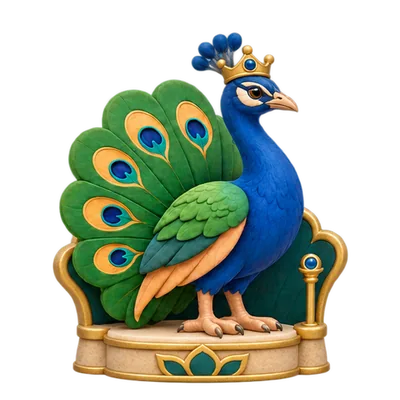
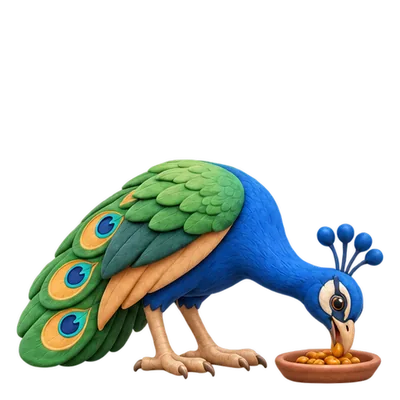
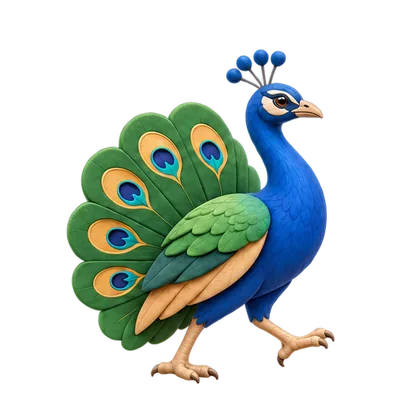
- Through each day and night, every bird passes through five activities: Ruling, Eating, Walking, Sleeping and Dying.
- The activities run from strongest to weakest, and at any moment the five birds hold five different ones.
- What your own bird is doing right now is the tradition’s answer to the question “is this a time to act or a time to wait?”
 Ruling
 Eating
 Walking
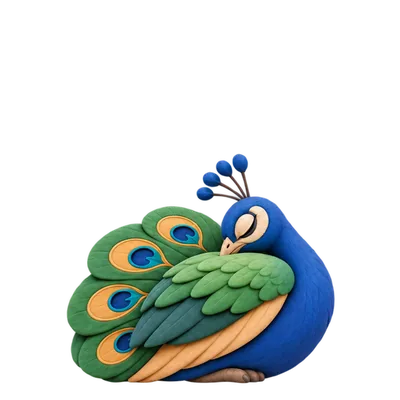 Sleeping
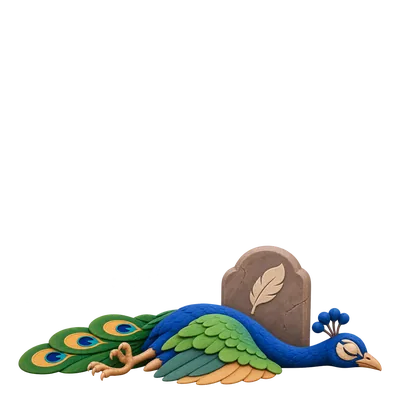 Dying
What you need to read it
Only a handful of facts, each covered in its own lesson:
- Your bird, found from the Moon’s star at your birth or from the first sound of your name.
- The half of the lunar month: the bright half while the Moon grows, the dark half while it shrinks.
- The weekday, counted from sunrise to sunrise.
- Day or night, and which of its five slots you are in.
- The turn inside that slot, a finer division of twelve to forty-eight minutes.
There is no horoscope to cast and no planetary arithmetic. Once you know your bird, everything else comes from the calendar and the clock, which is why the method was traditionally taught with a few tables that a student learned by heart.
Two words used on this site. A slot is one fifth of the day or of the night (Tamil ஜாமம், yamam). A turn is one of the five parts inside a slot (the sub-period). The Vihanga Hora app uses the same two words.
What it is not
Panchapakshi does not say what will happen. It describes the quality the tradition assigns to a stretch of time for a given bird, and leaves the acting to you. The old texts themselves insist that it be used with care and never against other people. This site follows that spirit: it explains the method so you can understand it and try it, and it makes no promises.
How the course runs
Fourteen short lessons, in order. Lessons 2 to 4 introduce the birds, the activities and how to find your bird. Lessons 5 to 7 build a day from sunrise to sunrise. Lessons 8 to 11 add the rules that colour a moment: ruling days, death days, friends, enemies and grades. Lesson 12 works through a whole day, lesson 13 surveys the wider tradition, and lesson 14 is about using all of it sensibly.
Every table on this site is generated from the same rule data that the Vihanga Hora app uses. Where the old sources disagree with each other, the Variants and sources page says which reading is followed.
Check yourself
What does your bird’s activity at a given moment tell you?